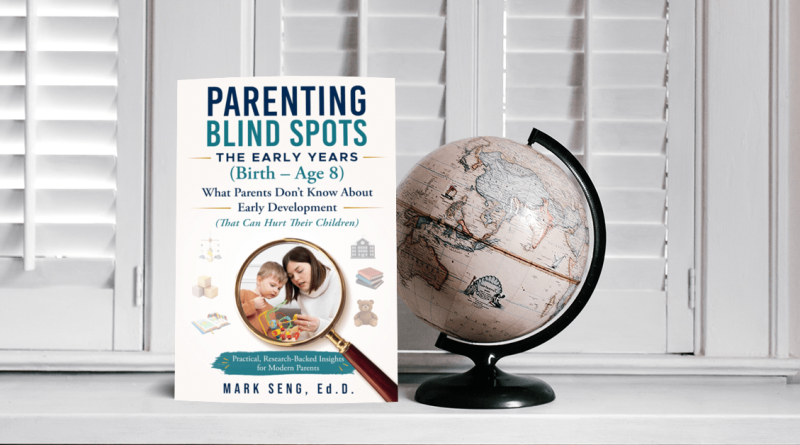
Parenting Blind Spots: The Early Years – Book Review
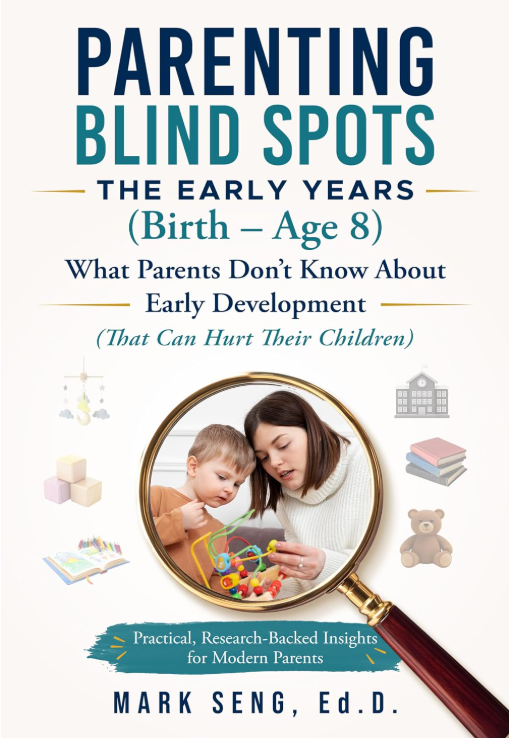
by Mark Seng
Parenting is a minefield of advice, opinions, warnings and those who inexplicably think a toddler tantrum can be addressed with one inspirational statement. But even the most attentive, loving and best-trying parents sometimes overlook things. Not because they don’t care, but because no one can know everything from the start.
And that’s where Parenting Blind Spots: The Early Years by Mark Seng, Ed.D., shines.
This insightful, easy-to-read guide focuses on the years from infancy through age eight, when children are quickly developing in emotional, social, and academic ways. Seng’s approach is much more helpful than adding more pressure or making parents feel that every little decision they make will ruin their child’s future. It’s better to help parents notice the everyday patterns and assumptions they might not have realized were shaping their child’s experience.
The book looks at nineteen “blind spots” from the newborn year through the toddler, preschool, and early elementary years. This isn’t about dramatic parenting fails or shame-filled gotchas. These are small, familiar moments: responding to a baby’s signs, handling a meltdown, approaching routines and limits, talking about feelings, navigating sibling conflict, managing screen time, and preparing youngsters for the transition into school.
For newborn babies, it talks about things like the importance of bonding and attachment and avoiding overstimulation. As we move into the toddler age, it talks about nurturing emotional intelligence and encouraging independence and autonomy, among other things.
For preschoolers, the book talks about transitioning to school, fostering imagination, and how to handle sibling rivalry, just as examples. In early elementary we look at things like the importance of a balanced routine, and handling friendship challenges.
Before the conclusion, there are also two chapters on parental self-care. You will learn the importance of parental well-being and how to encourage continuous learning and adaptation in parenting.
One of the great strengths of this work is its tone. Sometimes parenting advice might feel too clinical or weirdly judgmental, like the author couldn’t wait to inform you that you have been doing snack time wrong since 2019. Parenting Blind Spots avoids that pitfall. Seng writes with warmth and compassion, recognizing that parents are human, tired, overburdened, and still growing right along with their children.
And we are reminded that “You do not need to be a perfect parent”.
Each chapter starts with a little story from ordinary family life, so that the advice is presented as directly relevant, not abstract. From there, Seng translates the developmental research into layman’s terms and links it to what parents might see at home and at school. The reflective questions are especially important since they allow readers to pause and think on their own routines without falling into guilt.
Better yet, this isn’t the kind of book that gives parents a vague feeling that they should “be more intentional” and then sends them on their way. Each chapter contains hands-on approaches and modest linguistic modifications you may implement immediately. It makes it feel less like a lecture and more like having a knowledgeable, supportive coach in your corner.
As a parent for over two decades, I’ve read a lot of parenting books. And I also know all about the parts of early development that frequently get left out. Then, new parents find out the hard way.
I particularly liked that the book also addressed the well-being of the parent. Supporting a child’s emotional growth, confidence, and independence is crucial, but parents can’t pour from an empty cup forever.
“Taking care of yourself is part of taking care of your child, not something selfish you add on when life settles down,” Seng says.
This is so incredibly important! It also makes the book feel more complete. Send doesn’t just talk about what parents can do for their children, he also talks about what parents need to do to keep showing up for themselves, and each other.
Knowing when to take a break, or when to ask for help are valuable parts of parenting, too. Seng recognizes that parents are often exhausted, stressed, and trying to figure things out as they go. We have to give ourselves grace. And we have to be intentional about self-care. A parent’s well-being will impact how they respond to their child each and every day.
Parenting Blind Spots: The Early Years is a fantastic resource for parents, caregivers, and educators who want to learn more about the simple moments that can have a lasting effect. It is research-informed without being frightening, practical without being strict, and comforting without thinking parenting is easy.
If you’ve ever looked at your child and thought, “Am I missing something important?” this book gives you a sympathetic answer: maybe—but now you have a sharper way to see it.