
Sad Boy – Book Review
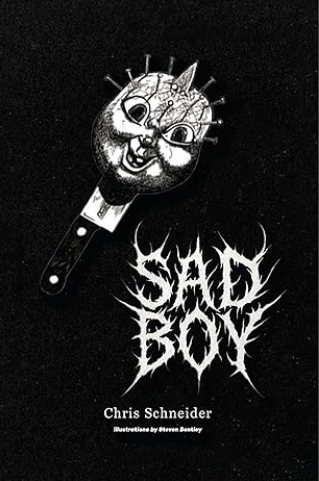
I absolutely LOVE poetry and I was so excited to get a review copy of this book, Sad Boy, to share my thoughts with you. And I will say upfront that I absolutely loved it!
This is Chris Schneider’s first collection of poetry, and it packs a real emotional punch. It doesn’t use metaphor to make its suffering seem more bearable, nor does it soften its edges for readability. Rather, Sad Boy immerses the reader in the broken heart of a troubled young person and keeps us there long enough to sense its weight. A raw emotional chronicle of adolescence molded by tragedy, self-destruction, ephemeral delight, and a hard-won sense of survival that will hit you right in the gut and in the heart.
Sad Boy, which is divided into four acts, follows a psychological arc rather than a traditional plot, unfolding like a somber coming-of-age drama. From the initial plunge into despair in Act I: Every Time I Die to the bitter tenderness of first love, political awakening, and ultimate reckoning, Schneider portrays youth as a battlefield – one strewn with pop culture trash, historical ghosts, and intrusive thoughts – rather than a nostalgic blur.
Compelling Storytelling Through Fragmentation
Sad Boy works astonishingly well as a coherent emotional narrative despite being a compilation of poems. The tone and internal state of the book change with each act, providing the reader with a narrative drive. Early poetry is cramped and angular, reflecting the disarray of a mind caught in cycles of hopelessness and hospitalization. Moments of love, resistance, humor, and ideological curiosity emerge throughout the collection – not as answers, but as disruptions. brief reprieves. necessary delusions.
Schneider’s strategy is blatantly disjointed, and it works well. The encounter seems both intimate and unsettling at the same time since lines appear more like intrusive ideas than well-crafted verses. This choice of style works. Instead of viewing it from a safe distance, it puts the reader into the speaker’s mind.
Writing Craft and Voice
Sad Boy’s voice is witty, sardonic, and self-aware. Schneider frequently contrasts hopelessness with pop culture allusions that anchor the poetry from a particular generational perspective, fusing dark comedy with stark honesty. Throughout the collection, there are references to political philosophy, music, movies, television series, and historical figures – not as gimmicks, but as mental shorthand. These allusions show how many people genuinely deal with suffering through stories and media that influence their inner lives.
Even though the poems seem disorganized at first, the rhyming is frequently precise and intentional. Schneider has a keen sense of rhythm, and many of his compositions seem as though they might be screamed or sung aloud without losing their power. This has a certain melodic quality, especially one that is reminiscent of the passionate intensity of alternative and metal lyrics. The poems are more than just words on paper; they have life.
Crucially, Schneider resists the need to justify himself. We are not gently guided toward meaning by the poems. Rather, they call for participation. The collection’s emotional logic becomes more acute as themes like death, love, power, revolt, and remembrance reoccur.
Themes of Mental Illness and Youth
Sad Boy is fundamentally an investigation of mental disease in adolescence and the early stages of adulthood. Without romanticizing them, the poems address suicide thoughts, hospitalization, loneliness, and identity confusion. These encounters are described as draining, degrading, terrifying, and extremely solitary.
The compilation isn’t nihilistic, though. There is a lot of humor, usually in the form of cultural irony or scathing sarcasm. One of the book’s strong points is the way it strikes a balance between seriousness and humor. It illustrates how many people get through trying times by laughing darkly and absurdly rather than by always being depressed.
When it manifests, love is powerful and brittle. Relationships increase vulnerability while simultaneously providing a means of escape. The idea that nothing in this emotional world is solid for very long is reinforced by the harsh edge of heartbreak. Graduation and endings convey a quiet, unsolved resilience rather than clarity.
Illustrations and Visual Impact
Steven Bentley’s ink illustrations are a standout feature of the collection. These images are not decorative; they are integral to the reading experience. Stark, macabre, and emotionally charged, the artwork mirrors the psychological tone of the poems with remarkable precision.
Bentley’s visual style amplifies the book’s themes of fragmentation, identity distortion, and internal violence. The illustrations often linger in the reader’s mind as long as the poems themselves, creating a dialogue between text and image that deepens the emotional impact. This collaboration elevates Sad Boy beyond a standard poetry collection into a fully realized artistic experience.
Introduction and Context
The introduction by DeQuan Wren sets an effective emotional and thematic tone for the book. It frames Sad Boy as both a personal document and a cultural artifact, preparing the reader for what lies ahead without diminishing the shock of the poems themselves.
While the introduction succeeds in contextualizing the work, some readers may find themselves wishing for a brief author’s note from Schneider as well. Given the deeply personal nature of the material, a glimpse into the author’s reflections on the process or inspiration could have added another layer of resonance. That said, the absence of authorial commentary also preserves the rawness of the collection, allowing the poems to stand on their own without mediation.
Accessibility and Readability
Despite its heavy subject matter, Sad Boy is surprisingly accessible – even for readers who do not typically gravitate toward poetry. The freeform style, cultural references, and emotional directness make the collection immersive rather than academic. At just over thirty pages, it is a quick read in terms of length, but not in emotional weight.
This is a book that can be read in a single sitting, yet it invites rereading. Many poems gain additional meaning once the reader understands the broader emotional arc of the collection.
Final Assessment
Sad Boy is not a gentle book, nor does it try to be. It is intense, unsettling, and unapologetically honest. Chris Schneider has crafted a debut poetry collection that captures the chaos and vulnerability of youth with striking clarity. The combination of raw language, sharp cultural awareness, and haunting visual art makes this a memorable and emotionally resonant work.
This is poetry for readers who value authenticity over comfort, who are willing to sit with difficult emotions, and who recognize the strange, dark humor that often accompanies survival. Sad Boy does not offer easy answers – but it offers recognition. And for many readers, that may be exactly what makes it powerful.
Recommended for fans of dark, experimental poetry, emotionally raw storytelling, and art that refuses to look away.