
Life and How to Live It: Near Wild Heaven – Book Review
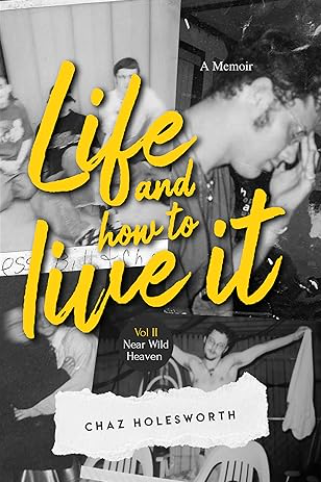
Certain memoirs describe what transpired. Others give you a sense of what it was like to live within a body that didn’t know how to belong to itself, a belief system, or a time. How to Live Your Life: Near Wild Heaven is definitely in the latter group.
I’ve been really looking forward to reading this second book in the memoir series, and now I’m excited to tell you all about it.
This book, which is the second in Chaz Holesworth’s autobiographical series, picks up where silence previously prevailed and explores what happens when it eventually breaks. Repression, faith, resistance, music, and the perilous thrill of finding your own voice for the first time all influence this coming-of-age tale. This memoir’s emotional honesty, rather than merely the incidents it describes, is what gives it resonance.
A Story of Emergence, Not Just Escape
Near Wild Heaven is more focused in the aftermath – what it truly feels like to enter the world once the rules that regulated you no longer apply – than many memoirs about constrained childhoods, which mostly concentrate on trauma alone. Chaz enters adolescence emotionally subdued, molded by a worldview in which obedience was equated with survival and terror was disguised as faith. He doesn’t suddenly become rebellious. Rather, he develops slowly, clumsily, and occasionally carelessly.
One of the book’s best features is this slow awakening. The story effectively conveys the perplexity of wanting independence yet lacking the means to exercise it responsibly. First love is disruptive, exhilarating, and profoundly formative; it is not romanticized as redemption. When traditional faith crumbles under its own weight, music becomes more than just the story’s soundtrack; it becomes a language, a lifeline, and ultimately a kind of prayer.
Writing That Trusts the Reader
Without being ostentatious, Holesworth’s writing is poetic. The emotional numbness he describes early on is mirrored in the writing’s restraint, which makes the intense moments – love, sorrow, curiosity, and shame – hit harder when they do. The book doesn’t moralize its mistakes or go into excessive detail about its suffering. It expects the reader to sit with unease, paradox, and unresolved feelings.
This works particularly well in the memoir’s treatment of drugs, reckless behavior, and self-destruction. These scenes aren’t told as dramatic story points or warning stories. They seem to be attempts to avoid some unidentified internal tempest, just like they frequently are in real life. The story gains credibility and emotional weight from this honesty.
Music as Memory and Identity
Near Wild Heaven’s connection to music is one of its most interesting themes. Set against the backdrop of teenage culture in the mid-1990s, Chaz’s inner development is inextricably linked to the era’s music. Songs that he was prohibited from listening to turned into windows into his identity, rebellion, and sense of belonging. Here, music is survival technology rather than nostalgia bait.
These allusions will be recognizable to readers who grew up in the same time period. The emotional purpose of music is nevertheless evident to those who did not. It is the thing that expresses what you are yet unable to put into words. It’s the slip of permission to feel.
A Memoir About Unlearning
Near Wild Heaven is really a novel about unlearning – unlearning spiritual rigidity, fear, guilt, and the notion that silence is secure. However, it’s also about what takes the place of those things: curiosity, chosen family, movement, and the gradual, imperfect recovery of speech.
Crucially, the memoir doesn’t pretend that recovery is simple or straightforward. There are repercussions for surviving. There is a price for freedom. Some getaways merely delay conflict. The book’s hope feels earned rather than forced since it accepts these realities without succumbing to despair.
Who This Book Is For
This memoir will resonate deeply with readers who:
- Grew up in restrictive or high-control religious environments
- Found themselves through music, movement, or counterculture
- Struggled with identity, shame, or emotional repression in adolescence
- Appreciate memoirs that prioritize emotional truth over tidy resolution
It’s also a great option for those who appreciate contemplative coming-of-age tales and poetic nonfiction that doesn’t back down from complexity.
Final Thoughts
Life and How to Live It: Near Wild Heaven is not a neatly packaged story of redemption. It is a chaotic, inquisitive, and incredibly genuine human document of becoming. Without justifying the harm caused by fear, brainwashing, or silence, Chaz Holesworth writes with empathy for his younger self. The end product is a memoir that is genuine, intimate, and subtly potent.
This book provides acknowledgment rather than solutions for anybody who has ever attempted to escape their past – or at last slowed down long enough to confront it. And occasionally, that’s precisely what we require. Stay tuned if you liked these first two, because there will be more in the series.
Get it for yourself on Amazon in paperback, hardcover and Kindle editions.