
The Old Norse Saga – Part One: Birds of Ásgarðr Book Review
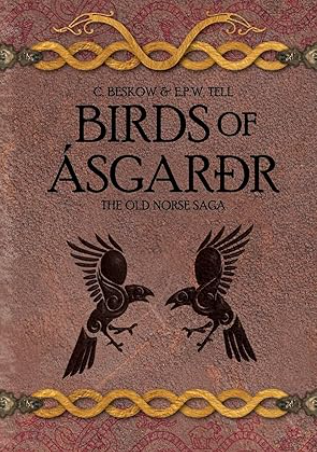
A Rich and Ambitious Return to True Norse Myth
Some fantasy books use mythology as inspiration. Some people really lose themselves in it. The Old Norse Saga: Birds of Ásgarðr does the latter with amazing assurance, crafting a story that resembles the recovery of an old tale long concealed beneath Yggdrasill’s own roots rather than a contemporary recounting.
I was immediately intrigued by the concept and the cover, but this story pulled me in and kept me there. I am so grateful to have gotten a review copy of this book, and to be able to tell you why I loved it, in this spoiler-free review.
To help set the tone right away, the book has a “to the Reader” section that also explains the language, pronunciation, and compendium of Old Norse characters and runes that are referenced throughout the book. There is also a Table of Contents that show what to expect from the 54 chapters, as well as the Appendices. And then, we jump right into story.
We have a mood of prophesy, sacrifice, and inevitability from its eerie first pages. It’s a story that is profoundly rooted in the spiritual and intellectual weight of Norse cosmology. The book lets its mythology breathe rather than hurrying into action, immersing readers in a universe where every vow, vision, and choice feels connected to forces that are much older than any one character.
This is part of what makes it so easy to get lost in.
The novel’s ability to truly convey the sense of myth without compromising emotional depth or readability was what most impressed me. The slow, almost poetic style of the language frequently reflects the cadence of oral storytelling customs. The writing has a gravity that gives the world real weight, but it never gets too complicated or difficult to read. Even if you’re not familiar with Old Norse, you’ll be able to understand and immerse yourself in this book.
Another strong point is the character work. Reimagining well-known legendary characters with subtlety and restraint makes them feel more like real people than untouchable myths. Particularly interesting is the young Ḥórr, who struggles with unease while residing among the giants of Jætunheimr. Similarly, Loki’s position in Ásgarðr generates intriguing tension that simmers beneath the surface of cultural mistrust and political alliances.
One of the novel’s best narrative decisions is the prisoner exchange between hostile peoples, which inevitably pushes characters into awkward emotional and intellectual area. Without ever coming across as oppressive, the novel revolves around themes of identity, belonging, loyalty, and hereditary prejudice. Beneath its epic grandeur, the work has a powerful emotional core thanks to the complex and plausible relationships that are developed across enemy lines.
It feels real and relatable.
The worldbuilding is another noteworthy component. This fantasy is not based on hazy Viking aesthetics. The writers clearly spent years studying Norse mythology, history, language, and cosmology. The Nine Realms feel unique and vibrant, molded by the climate, culture, and long-standing conflicts. A universe that feels fully formed rather than only loosely inspired is created by even the smallest aspects, such as naming practices, spiritual symbols, social systems, and mythological allusions.
I particularly valued the novel’s acceptance of complexity. Mythology is not reduced to simple heroes and villains in Birds of Ásgarðr. It’s never that simple!
The very nature of fate seems unpredictable and perilous. Alliances are brittle. Characters are always torn between love, ambition, fear, and obligation. The story has a maturity that distinguishes it from many fantasy debuts because of its moral and emotional complexity.
The human viewpoint that is incorporated into the divine struggle also gives the story a crucial sense of balance. Even in the midst of cosmic conflicts, the novel never forgets that mortal lives are important. The book maintains emotional resonance throughout because some of the more subdued human exchanges have just as much power as the more significant mythological revelations.
If you love literary epic fantasy, mythology-rich fantasy, and historically grounded worldbuilding, I think you will really love this book!
Birds of Ásgarðr stands out as a contemplative and engrossing reinvention of the Norse universe because it is full of mythology, has complex character interactions, and was written with obvious passion for the original work. This type of fantasy enables readers to live inside mythology rather than just watch it.
5 stars from me!