
The Journal of Lettice Moore – Book Review
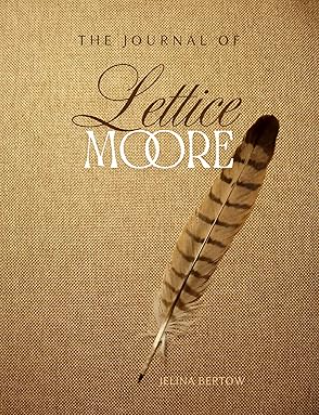
I was very excited to get a review copy of this book. I love books written in journal or diary style and I was intrigued by the description. I also enjoy historical fiction, so I was eager to dive in. I’m looking forward to telling you what I loved about it in this spoiler-free review.
Jelina Bertow’s work, which is set in a tiny English seaside town in 1905, is told via the diary of Lettice Moore, a lady whose life seems ordinary on the outside: every morning she rides from the harbor to deliver fresh fish to well-known doorsteps. The routine is consistent and hardly noteworthy. However, Lettice’s journal offers a world of perception, insight, and emotional nuance that gradually captivates the reader.
It dives right in from the first page with an entry from Lettice Moore at Barton Cottage on June 3, 1905. One thing I loved from the beginning is that she describes her journal in the first entry. I do this with my own journals, so it made me smile. We also learn in the first few entries about Lettice, her location and environment, and how she feels about things.
This book is unique because it focuses on the minor details that other books ignore. Lettice observes the harbor’s fluctuating moods, the unspoken norms of village gossip, the subtle social tremors brought on by a new clergyman, and the private questions that slowly grow inside her own heart. Instead of imposing drama where it doesn’t belong, Bertow handles these subtleties with patience and respect, letting meaning develop organically.
The writing is personal without being overbearing. It truly is like discovering a long-forgotten journal, its corners softened by time, nestled into a wooden drawer. Lettice has a clear, soft voice that is serious but unpretentious. A gentle knowledge that feels earned rather than performed permeates her reflections.
In other entries, we learn about her family and the church they attend every week, and we see the way she observes people in comments like “people show more of themselves in their small remarks than in any fine speech.”
This book has a profoundly grounding quality. It serves as a reminder to the reader that a worthwhile existence need not be grandiose or chaotic. Because Lettice pays attention to people, change, and her own changing thoughts, her inner world is rich. This focus turns into the book’s subtle argument.
One of my favorite activities besides journaling is people-watching, and that’s the vibe I get from reading Lettice’s words. She observes people… and she sees so much more than just what is on the surface. And not just with people – she also notices all the subtleties of the world around her that many people overlook, and it was such a joy to read.
We learn about her baking – beating eggs until her arm is sore, we hear about the fair, about her regular visits to church, and how she spends her time at home, and at the harbor. And as another beautiful, unique feature to this book, there is music that goes with the story. You can hear it here. I really enjoyed listening to the playlist while reading Lettice’s words.
The book ends on August 28, 1905 when Lattice fills her book. I truly hope she continued writing. I know I would love to keep reading!
Readers who appreciate leisurely narrative, emotional nuance, and interior lives in historical fiction may find particular resonance in The Journal of Lettice Moore. It’s a book for readers who value character, ambiance, and the poetry of daily life.
You don’t need to rush through this book. Like Lettice herself, it urges you to take your time, pay attention, and observe. By doing this, it provides something uncommon: a serene, introspective reading experience that lasts long after the last page.
You can get this book for yourself on Amazon in paperback and Kindle editions, and it’s free to read on Kindle Unlimited.